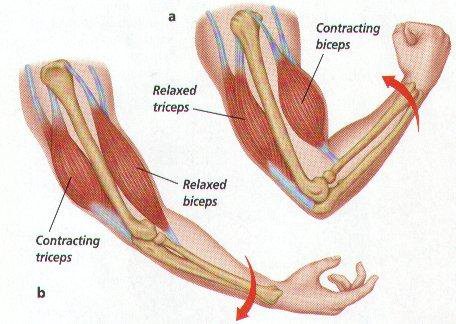
Muscle contraction
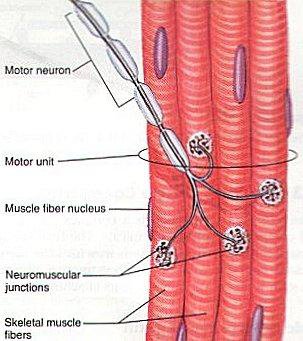 Stimuls: nerve impulses that are caried by the motor neuron to the muscle fibre
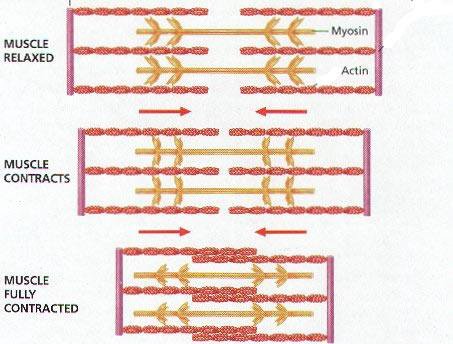
Principle: based on slighting of myosin filaments toward the actin filaments
Basic components involved in muscle contraction:
motor neuron - neuron that conducts nerve impulses from the CNS to the muscle fibre
neuromuscular junction - the point of contact between motor neuron and muscle cell
Motor unit - conection between muscle fibre and motor neuron
acetylcholine - chemical substance, neurotransmitter that is responsible for muscle tonus formation
Sacroplasmic reticulum - special type of endoplasmic reticulum which contains Ca2+ when muscles relaxes
 troponin - protein that indicates muscle contraction
Ca2+ - ions need for muscle contraction
ATP - source of energy for muscle contraction
Myosin and Actin - filaments involved in muscle contraction
Mechanism of muscle contraction: = The sliding filament theory
1. transmition of nerve impulse
- nerve impulse is carried by motor neuron to the neuromuscular junction, in next step vesicles of neuromuscular junction release acetylcholines and muscle start tonus
2. formation of muscle contraction
- after muscle tonus formation Sarcoplasmic reticulum releases Ca2+ (when it´s within Sarcoplasmic reticulum - actin and myosin start to repulse), troponin initiates myosin to form cross-bridges toward the actin filaments complex actin-myosin bond and muscles contraction occure, when Ca2+ returns to the Sarcoplasmic reticulum using ATP actin and myosin starts to repuls and muscles relaxes
Muscle contraction
No comments found.